You Run Too Fast: Why "Slow" Zone 2 Running Makes You Faster Than Sprints
You lace up your shoes, start your watch and head out. You run so that you get “a bit out of breath,” feel the sweat and feel like you worked hard. Your pace is maybe 5:00 or 5:30 min/km. You come home satisfied.
As an IRONMAN Certified Coach, I have bad news for you. That run may have given you less than you think.
Welcome to the trap called the “Gray Zone.” It’s where many triathletes’ dreams of a personal best go to die.
Running in triathlon is specific because you start the run tired. Besides low intensity, you also have to train the transitions, which I cover in the article on how to run off the bike and master brick workouts.
What Is Zone 2 and Why Does Everyone Ignore It?
In my experience, many amateurs train by “no pain, no gain.” They think that if a workout doesn’t hurt, it doesn’t work. The result is that they spend much of their time in Zone 3 (moderate intensity). It’s a zone that is:
Too fast to build an aerobic base and burn fat.
Too slow to build speed and lactate tolerance.
Tiring enough that you can’t deliver a quality session the next day.
The answer is Zone 2. It’s low intensity (roughly 60 – 70% of your maximum) at which you can speak in full sentences. For many people it means an “embarrassingly slow jog.”
Why do I make you run slowly? For one reason: Mitochondria.
Biology Doesn’t Bend: We’re Building the Engine
Imagine your body as a hybrid car. You have a small electric motor (sugar/glycogen) and a huge diesel engine (fat).
Glycogen (sugar): Your body stores only a limited amount of it, roughly enough for around 90 minutes of intense effort, depending on the athlete and fueling.
Fat: You store far more energy in it (even if you’re lean).
An Ironman takes 9 to 15 hours. Few people can get through it on stored sugar alone. It helps to teach your body to burn more fat. And here’s the trick: fat metabolism and mitochondria (the cellular power plants) are built mainly through lots of low-intensity work like Zone 2. As you speed up into Zone 3, your body relies more on sugar and less on fat.
If you teach your body to burn fat in Zone 2, you may rely less on external sugar in races and lower the risk of stomach problems, which I cover in the article on nutrition and energy strategy.
Ego Is Your Biggest Enemy
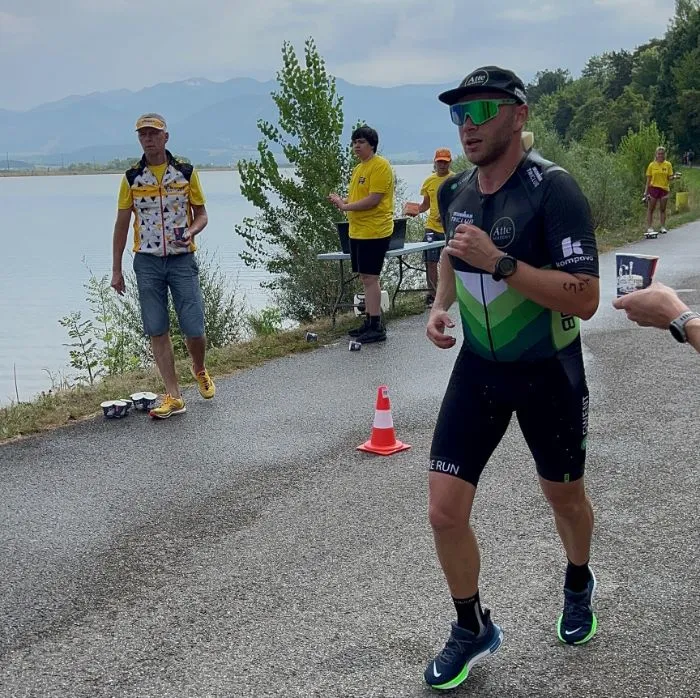
The hardest part of Zone 2 training isn’t physical. It’s mental. You run out onto the embankment path and “Sunday joggers” pass you. Your ego shouts: “Speed up! You can do better!”
My athletes at Atte ACADEMY know they have to leave their ego at home. When I write “Run 60 minutes in Z2” in your plan, I don’t care about your pace. I care about your heart rate. If you have to walk uphill to keep your heart rate low, then you’ll walk.
The result? After a few months of consistent “slow” running, many athletes find that at the same low heart rate they run faster. Your engine has grown.
How Do You Find Your Zone 2?
The 220-minus-age formula is only a rough estimate and is often inaccurate for an individual athlete. You have three options:
Talk Test (free): Run so that you could recite the alphabet or talk on the phone without gasping for air. As soon as you start to pant, slow down.
Lactate test (more precise): A prick of the finger or ear during effort.
Data Analysis (My Method):
As a coach, I can determine your aerobic threshold (AeT) from your historical data and tests.
A similar principle applies on the bike. There, too, you need to know your threshold values. If you haven’t set up your bike zones, read why the FTP test and correct watt settings matter.
Stop Running “Junk.” Start Training.
If you want to pass walking competitors in the last 10 kilometers of an Ironman, you need a well-built fat metabolism. You can’t buy it in a gel shop. It’s built with patience in Zone 2.
Don’t know where your zones are? Training by feel and stagnating?
Put yourself in the hands of an expert.
This article is a key part of our running methodology. For a complete view of training, also read my Complete Guide to Running in Triathlon.
Book a training program at Atte ACADEMY. I’ll measure your zones, set your heart rates and teach you that sometimes slower is actually faster.