Swimming in Triathlon: How to Survive the Opening Leg and Climb Out of the Water Fresh
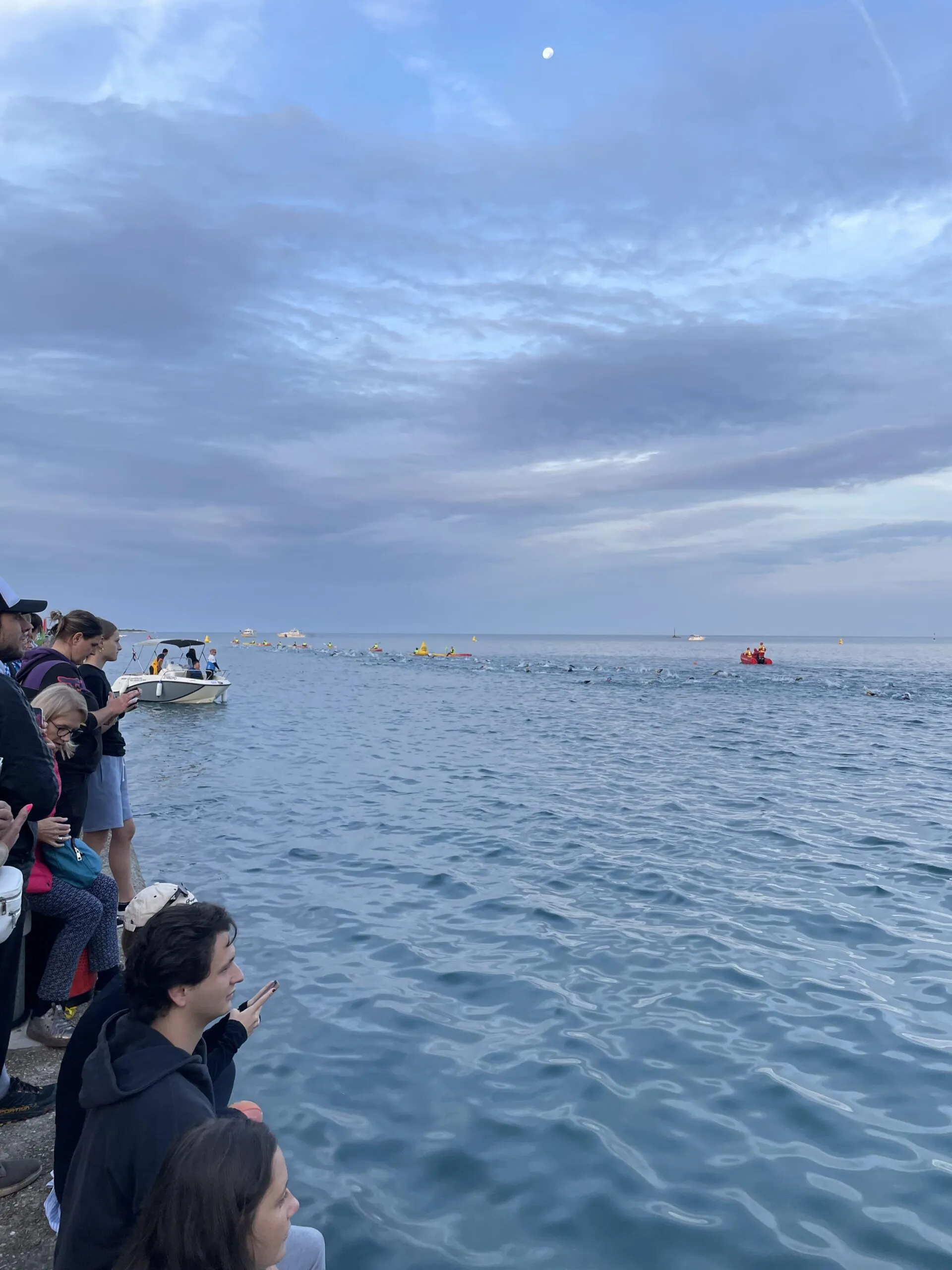
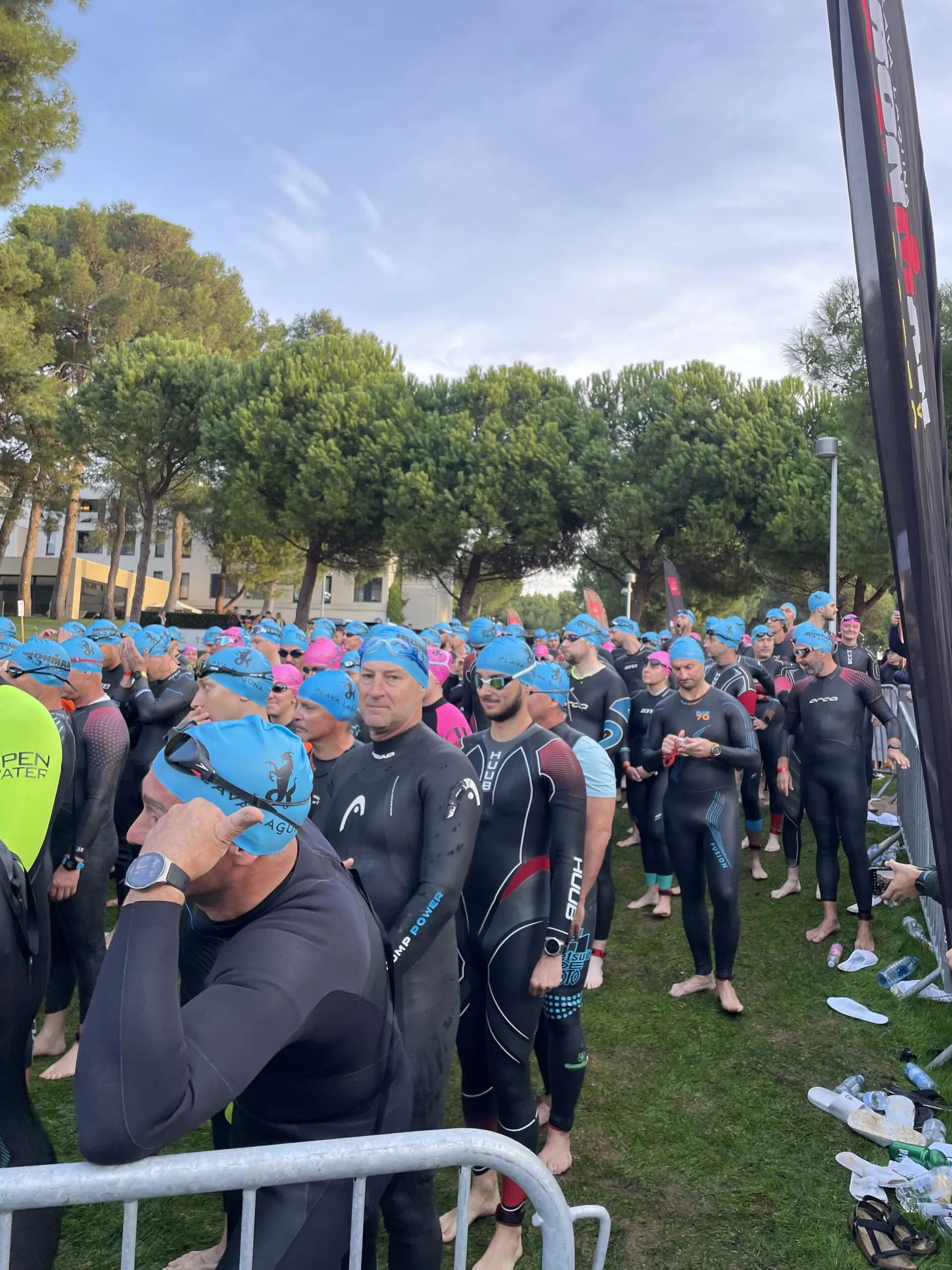
You’re standing on the shore of a lake. The water is dark, cold, and you can’t see the bottom. Around you are hundreds of nervous people in black rubber suits. The horn sounds. The water starts to boil.
For most triathletes, swimming is just a “necessary evil” to get through so they can reach the bike. As an IRONMAN Certified Coach at Atte ACADEMY, I get it. But I’m also telling you this: If you’re fighting for your life in the water, you’ll lose the race on land.
Triathlon swimming isn’t about beauty. It’s about economy and orientation. In this guide I’ll show you why pool training isn’t enough and what you need to change.
1. Pool vs. Open Water: Two Different Sports
In the pool you have certainty. You see the black line, you have a wall every 25 meters, the water is clear. In a lake or the sea, I take those certainties away. There’s no line, there are waves, the sun is in your eyes and another swimmer kicks you.
In my experience, a common reason people don’t finish a triathlon (DNF) is panic. It isn’t that they can’t swim. It’s that their brain reads the situation as a threat to life and “switches off” their technique.
Read the article: Fear of Open Water: Why the Pool Doesn’t Prepare You for the Real Thing and How to Train Your Mind.
2. Gear: The Wetsuit Is Your Best Friend
If you’re a weak swimmer, I have good news: A wetsuit is legal doping. A quality swimming wetsuit not only protects you from the cold, it above all gives you buoyancy. It lifts your legs, improves your body position, and many athletes swim faster with less effort.
But be careful: choosing a wetsuit is a science. If you buy the wrong size, it will choke you around the chest (which triggers panic) or it will “blow up” your shoulders.
Read the article: How to Choose a Triathlon Wetsuit: An Investment That Buys You Confidence.
3. Technique: “Sighting” (Navigation)
In the pool you swim straight thanks to the lines. In a lake you swim wherever the current or your muscle imbalance carries you. Many beginners swim noticeably more than the course distance simply because they zigzag like drunken sailors.
You need to learn a technique called sighting. It’s the ability to look ahead without stopping or letting your legs sink. It’s like a “crocodile”: only your eyes above the surface, breathe, and carry on.
Read the article: How to Swim Straight: The “Sighting” Technique So You Don’t Swim Hundreds of Extra Meters in the Lake.
4. Breathing and Rhythm
On the bike and on the run you breathe whenever you want. In the water you breathe when your technique allows it. Hypoxia (lack of oxygen) is a stressor. If you start sprinting at the start, you can go into oxygen debt and struggle to recover. Safety: never swim alone in open water, and if you feel unwell or disoriented, signal a lifeguard or safety boat.
I teach my athletes one strategy: “Start slow so you can speed up.” The first 200 meters must be about calm. Find your place, settle your heart rate, and only then start racing.
Conclusion: Turn Fear into Respect
Water is an element. You can’t fight it, you have to blend with it. If you want to come out of the water smiling and not with a heart rate of 180, you need specific preparation.
At Atte ACADEMY I won’t just take you to the pool. I’ll prepare you mentally and technically for the chaos of open water.
Afraid of swimming? Book a consultation. I’ll teach you how to feel at home in the water.