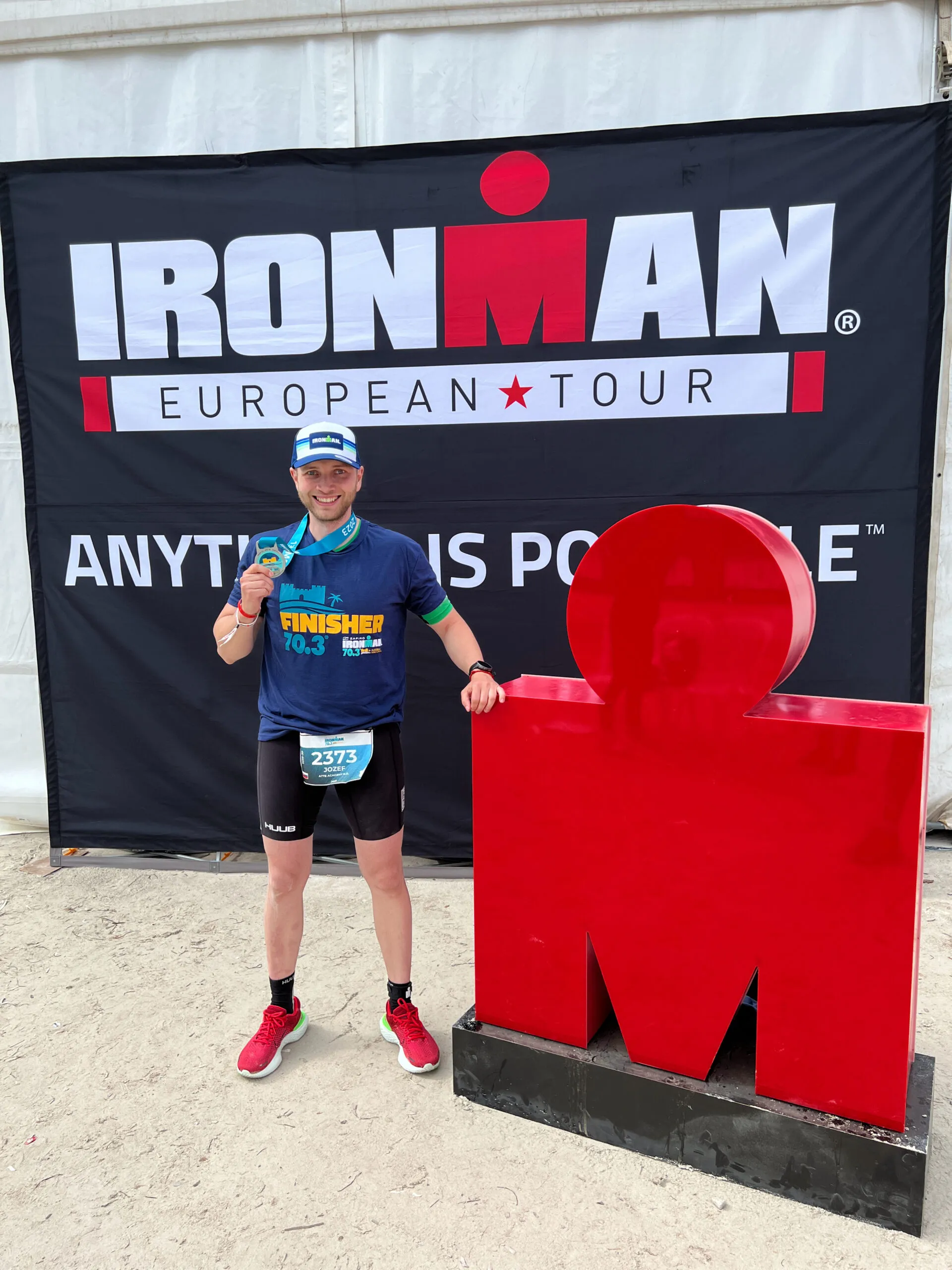
How to Train for an Ironman on a 50-Hour Work Week (Without Getting Divorced)
The alarm goes off. It is 5:00 a.m. It is dark outside. Your kids are still asleep, and you sneak quietly into the kitchen, make an espresso and sit down on the trainer. After work you run home, grab a quick bite and head to the pool. On the weekend you disappear for 4 hours on the bike.
And then comes that line from your partner: “Not home again? Is that triathlon more important than us?”
Do you feel that pressure? The guilt? As an IRONMAN Certified Coach, I understand. Most of my clients at Atte ACADEMY are not professionals who get paid to sleep and train. They are executives, lawyers, entrepreneurs and parents.
I have good news: To be an “Ironman,” you do not have to train 20 hours a week. In fact, if you have a job and a family, training 20 hours can be counterproductive. You risk wrecking yourself.
Here is how to handle it efficiently.
1. Forget “Junk Miles”
The biggest time sink is inefficient training. Amateurs think the more kilometers, the better. They get on the bike and “cruise” for 3 hours with no structure.
You cannot afford that. My athletes train less, but more intensely and more precisely.
If you only have 60 minutes, we turn it into a high-quality interval session based on your FTP watts.
If you have a long run, we stick strictly to Zone 2 to build endurance, not fatigue.
My philosophy is: Every minute must have a purpose. If a workout has no physiological goal, I cross it out of your calendar and send you to the playground with your son instead. You can find more on effective cycling training in the Cycling Guide.
2. Consistency > Heroic Weekends
Many people cannot fit training in during the week, so they try to “catch up” on the weekend and wreck themselves with a 6-hour session. The result? On Monday they are useless at work, and the family is angry that dad or mom “slept through Sunday.”
The secret to success is micro-dosing. It is better to train 45 minutes a day (for example in the morning before work or during a lunch break) than in bursts on the weekend. Your body often adapts better and you are present at home. If you notice pain or constant fatigue, back off and see a professional.
3. Your family is your sponsor (you have to win them over)
This is the psychological side of coaching. Ironman is not an individual sport. It is a team sport, and your family is your Support Team.
I recommend a “Golden Tickets” strategy to my clients:
Agree with your partner on the exact times you train (for example Tuesday/Thursday mornings and Saturday morning).
The rest of the time (Sunday afternoon, evenings) belongs to your family 100%. No checking Strava, no tired lying on the couch.
If you have a long workout planned, get up at 5:00. By 9:00 you are back and have the whole day for your family.
4. Outsource the thinking (why you need a coach)
At work you are a manager. You make a thousand decisions a day. The last thing you want to deal with in the evening is: “What should I train tomorrow? Should I run or ride? And at what pace?”
Decision paralysis costs you energy and time. When you hire me, I become your project manager.
You open the app.
You see the workout.
You do it.
Done.
If an unexpected business trip or a sick child comes up, you do not panic. You message me and I rework the plan so you do not miss out on anything.
Conclusion: You are buying time, not just training
Investing in coaching at Atte ACADEMY pays you back in saved hours. Stop guessing. Stop training “fluff.”
I will give you a system that helps you aim to finish your Ironman with energy left, with your family waiting at the finish line with a smile, not divorce papers.